Have you heard July 4, 2026 is the deadline for your business to save 30% or more on solar? That’s not exactly true – the full credit remains available on either of two timelines.
You’ve probably seen July 4, 2026 quoted everywhere as the hard deadline for commercial federal solar tax credits. The truth is more nuanced. July 4th is a vital date to understand, but it’s certainly not your last chance. Below, we’ll walk through how the current deadlines actually work, what’s still on the table, and how the federal Investment Tax Credit (ITC) can still work for you.
What's Still Available
Whether you’re looking to safe harbor or not, there are still many opportunities to make solar an even better option financially. The following federal benefits remain on the table for commercial solar projects that qualify under either path (more on those below) (2)(3):
- 30% Base Investment Tax Credit (ITC): A dollar-for-dollar reduction in federal tax liability
- Up to +10% Domestic Content Bonus: For projects meeting U.S. manufacturing thresholds
- Up to +10% Energy Community Bonus: For projects in qualifying locations
- 100% Bonus Depreciation: On the depreciable basis, fully deductible in year one
- Elective Pay (Direct Pay): For tax-exempt entities such as schools, municipalities, religious institutions, non-profits, etc.
With all bonus adders stacked, the credit can reach 50% of project cost for some customers. Combined with bonus depreciation, many commercial owners recover roughly half of their total project cost through first-year tax benefits.
These benefits are accessible through either of two paths: safe harbor by July 4, 2026 (place in service by December 31, 2030), or begin and complete the project so it’s placed in service by December 31, 2027. After 2027, the credit closes for commercial solar projects that didn’t safe harbor.
Ready to take advantage of 30% or more in savings? Our teams will help walk you through the best way to maximize savings for your specific situation.
What it Takes to Qualify for Safe Harbor
There are two boxes to check to claim the federal Investment Tax Credit. First, you need to establish a beginning of construction (BOC) date. Second, you need to place the project in service by the applicable deadline. The methods you use to meet each, and the timing that applies, depend on your project’s size and when you reach BOC.
Box 1: Begin Construction (two recognized methods)
“Begin construction” is a tax term used by the IRS, and actually doesn’t require physical installation to begin. To safe harbor, the IRS recognizes two methods (1)(7):
Physical Work Test: Significant work has commenced either on-site (for example, foundations, racking, electrical infrastructure) or off-site under a binding contract (for example, custom equipment in fabrication for your specific project). No dollar minimum applies. Available to projects of any size.
5% Safe Harbor: The owner has paid or incurred at least 5% of total project cost. Available only to projects of 1.5 megawatts (AC) or smaller – which covers the majority of commercial rooftop and small ground-mount jobs in our market. For many of our commercial customers, a signed contract paired with a documented project deposit is the most efficient path.
Only one method must be satisfied to claim the safe harbor.
Box 2: Choose Your Placed In Service Path
Safe Harbor by July 4, 2026. Projects that establish beginning of construction by July 4, 2026 have until December 31, 2030 to be placed in service – a four year continuity safe harbor that maximizes flexibility on design, permitting, interconnection, and supply chain.
Place in Service by December 31, 2027. Projects that begin construction after July 4, 2026 can still claim the full 30% credit, but must be placed in service by December 31, 2027. This is a substantially compressed window that will face heavy demand on equipment, labor, and interconnection capacity as the deadline approaches.
Both paths yield the same 30% credit and the same access to bonus adders. The difference is how much time you have to design, permit, build, and energize.
Which Path Makes Sense for Your Project
For most projects, Safe Harboring is the better decision when it’s achievable. Safe harboring by July 4, 2026 buys you nearly four years of breathing room to design, permit, build, and energize, plus the ability to lock in today’s pricing, equipment availability, and incentive structures before market conditions tighten.
However, missing July 4 doesn’t end the conversation. You can still take advantage of the full 30% credit, just on a tighter timeline. For projects with a clear path to commissioning, that can be entirely workable. The right path depends on where your project stands today and how much flexibility your timeline can accommodate. Our team will help you weigh both options and determine the best path forward for your project, factoring in site conditions, project size, timeline, and financing.
What Changed in 2025
The One Big Beautiful Bill Act (OBBBA), signed July 4, 2025, restructured the federal clean energy tax credit framework (3). Four big shifts:
- Sharper deadlines replaced the previous gradual phase-down, bringing on the July 4, 2026 safe harbor deadline and the December 31, 2027 place in service deadline
- The 5% Safe Harbor was eliminated for projects exceeding 1.5 MW
- New Prohibited Foreign Entity (PFE) sourcing restrictions took effect January 1, 2026
- 100% bonus depreciation was permanently restored
In practice, the credit remains fully available, however, capturing it now requires earlier action, careful equipment selection, and tight documentation from day one.
Bonus Credits, Sourcing Rules, and Additional Tax Benefits
The 30% base ITC is the foundation. Several additional layers can materially improve project economics:
Domestic Content Bonus (+10%)
Projects meeting U.S. manufacturing thresholds for steel, iron, and manufactured products earn an additional 10% credit. The required threshold is 50% in 2026 and rises annually. Achievable for most rooftop systems with deliberate equipment selection.
Energy Community Bonus (+10%)
Projects sited in qualifying brownfield, former coal, or fossil-fuel dependent communities earn another 10% (4). Eligibility is parcel-specific, several Upstate New York census tracts qualify, and we confirm status during the site review.
100% Bonus Depreciation
The OBBBA permanently restored full first-year bonus depreciation for qualifying property placed in service after January 19, 2025. For commercial solar, the depreciable basis (project cost minus half the ITC claimed) can be deducted entirely in year one rather than over five years, materially accelerating the tax shield.
Prohibited Foreign Entity (PFE) compliance
Effective January 1, 2026, projects must demonstrate that components sourced from prohibited foreign entities fall below a Material Assistance Cost Ratio threshold (40% non-PFE for solar in 2026, rising annually) (5)(8). These rules were previously referred to as Foreign Entity of Concern (FEOC) restrictions; both terms remain in common use. Non-compliance disqualifies the project from the ITC entirely. We vet every component and obtain supplier certifications before contracts are executed.
Why Kasselman Solar?
Choosing a commercial solar partner is a multi-year decision. Three major factors distinguish us:
End-to-end project delivery, one accountable team. From site assessment through commissioning, your project stays in house: engineering, permitting, equipment procurement, electrical installation, interconnection, and energization. One point of contact, always.
Backed by Kasselman Electric’s commercial expertise since 1948. Kasselman Solar is an affiliate of Kasselman Electric – a third-generation, family-owned commercial electrical contractor that has served New York businesses, schools, manufacturers, and municipalities for nearly 80 years. With more than 4,000 solar installations to our name, that deep commercial electrical track record backs every project we deliver. When your placed in service date arrives in 2029 or 2030, the same team will be in place to finish what we started.
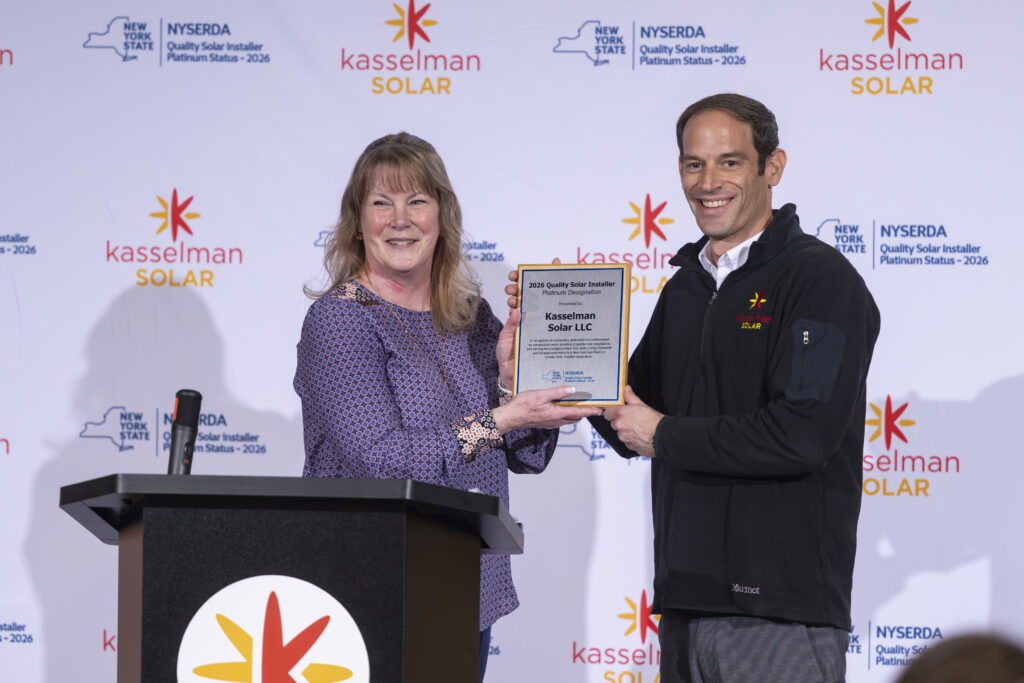
Credentials your project will be measured against. NYSERDA Platinum Status – one of only four installers in New York, awarded only after six consecutive years of meeting NYSERDA’s Quality Solar Installer benchmarks.
Plan Your Path with Maximum Savings
The Federal Investment Tax Credit remains available to commercial solar projects on either path: safe harbor by July 4, 2026 for a four year construction window, or place in service by December 31, 2027. We’ll review your site, model your project, and help you determine which path works best for your goals so you can make an informed decision.
Reach out to Kasselman Solar now and see how we can get your business started on a path to a brighter future!
Frequently Asked Questions
Yes. The full 30% Federal Investment Tax Credit (plus bonus adders available for domestic content and energy communities, and 100% bonus depreciation) is available to commercial solar projects on either of two timelines: safe harbor by July 4, 2026 (placed in service by December 31, 2030), or placed in service by December 31, 2027.
Not exactly. July 4, 2026 is the cutoff to begin construction for projects that want the four-year placed in service safe harbor (through December 31, 2030). Projects that begin construction later can still claim the full 30% credit, they just need to be placed in service by December 31, 2027.
So missing the July 4, 2026 deadline doesn’t mean there’s no more credit available, it just means you’re on a much tighter schedule!
At a minimum: a signed contract and either documented project deposit towards the 5% Safe Harbor or evidence of significant physical work. The specific requirements depend on project size and structure. All of this we will work with you on and discuss prior to beginning the project.
The ITC can be carried back up to 3 years or carried forwards up to 22 years. Bonus depreciation can also create a net operating loss that carries forward. Most commercial owners are able to fully utilize both benefits over time – your cpa can model the most efficient claim schedule for your specific tax position.
Yes. The Inflation Reduction Act introduced elective pay/direct pay, which essentially allows tax-exempt entities to receive the ITC as a direct payment from the IRS (6). The same construction and placed in service deadlines apply.
Eligible tax-exempt entities generally include schools, municipalities, religious institutions, and non-profits.
No. Battery storage operates on a separate federal deadline that extends well beyond solar’s deadlines – storage projects can begin construction through 2033 at the full credit rate, with phase downs beginning later in the decade. This allows you to separate your solar and battery projects to ensure you can claim all available incentives.
For solar projects that have not established safe harbor by July 4, 2026, yes, the credit is expired for all projects placed in service after December 31, 2027.
This is subject to change based on any potential future legislation.
Published: 6/26/2026
This page is provided for informational purposes only and does not constitute tax or legal advice. Federal tax rules governing the Investment Tax Credit, safe harbor qualification, and PFE/FEOC compliance are complex and continue to evolve. Project owners should consult their CPA or tax counsel before making investment decisions.
Sources:
- Internal Revenue Service. Notice 2025-42: Beginning of Construction Guidance for Wind and Solar Facilities. August 15, 2025.
- Solar Energy Industries Association. Explained: The Clean Energy Provisions in the One Big Beautiful Bill. 2025.
- Novogradac & Company. OBBBA and the Clean Energy Race Against the Clock. 2025.
- U.S. Department of Energy. Energy Community Tax Credit Bonus. 2026.
- Internal Revenue Service. Notice 2026-15: Interim Guidance on Material Assistance from Prohibited Foreign Entities. February 12, 2026.
- Internal Revenue Service. Elective Pay and Transferability Frequently Asked Questions. 2026.
- Solar Energy Industries Association. Commence Construction Guidance. 2025.
- PV Magazine USA. Treasury, IRS Release Interim Guidance on Prohibited Foreign Entity Restrictions for Solar Tax Credits. February 13, 2026.