How AI’s explosive growth is driving up your electric bill, and what New York homeowners can do about it
Spring may be right around the corner, however we’re still feeling the effects of this winter’s record cold in Upstate NY. If your electric bill has felt heavier lately, you’re not imagining it. This winter, the average U.S. household was projected to spend upwards of $1,000 on heating alone (1).
In 2025 alone, the cost of electricity rose by more than 6% – more than double the rate of inflation. The average New York residential electricity price now sits roughly 50% higher than the national average, making it among the top ten most expensive rates in the country (2).
What’s causing costs to grow this rapidly? Aging utility infrastructure, extreme weather, rising wholesale energy costs, and more all play a role. But there’s one fast-growing reason that’s rapidly reshaping the electricity landscape: AI data centers. Let’s take a look at how data center demand is impacting your electricity costs directly, what it means for New Yorkers specifically, and why solar remains one of the best steps homeowners can take to control their energy bills.
The Data Center Boom is Driving Up Your Electric Bill
The explosion of artificial intelligence, specifically the growth of companies such as ChatGPT, Claude, AI-generated image services, and more automated systems, requires massive data centers to operate. And that demand is already showing up in your electricity costs.
What is a Data Center?
A data center is a dedicated facility that houses the servers, storage systems, and networking equipment used to store, process, and move digital data. It provides reliable power, backup systems, cybersecurity controls, and temperature management so applications and services can run 24/7 at high levels (3).
Why does AI Require so Many New Data Centers?
AI is making data centers grow fast because AI needs a lot more computing power than most software. Training and running AI models uses huge amounts of specialized equipment, data, electricity, and cooling. As more and more people and businesses use AI every day, companies have to build and expand their data centers to keep up.
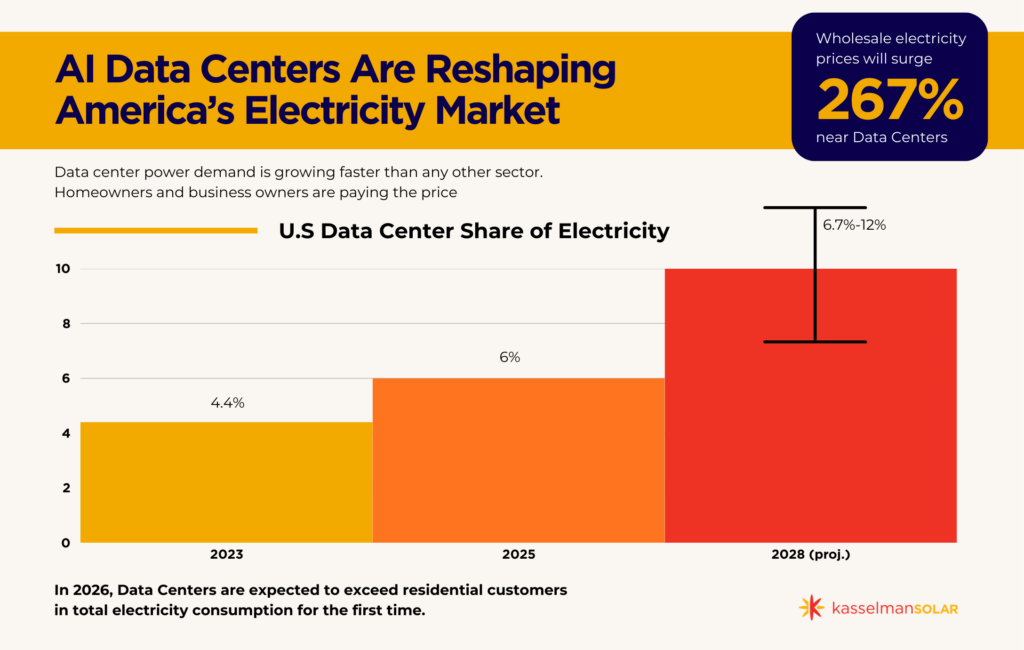
The Energy Information Administration (EIA) expects data centers to exceed residential electricity use for the first time in 2026. Households in regions with more data centers are likely to be worse off.
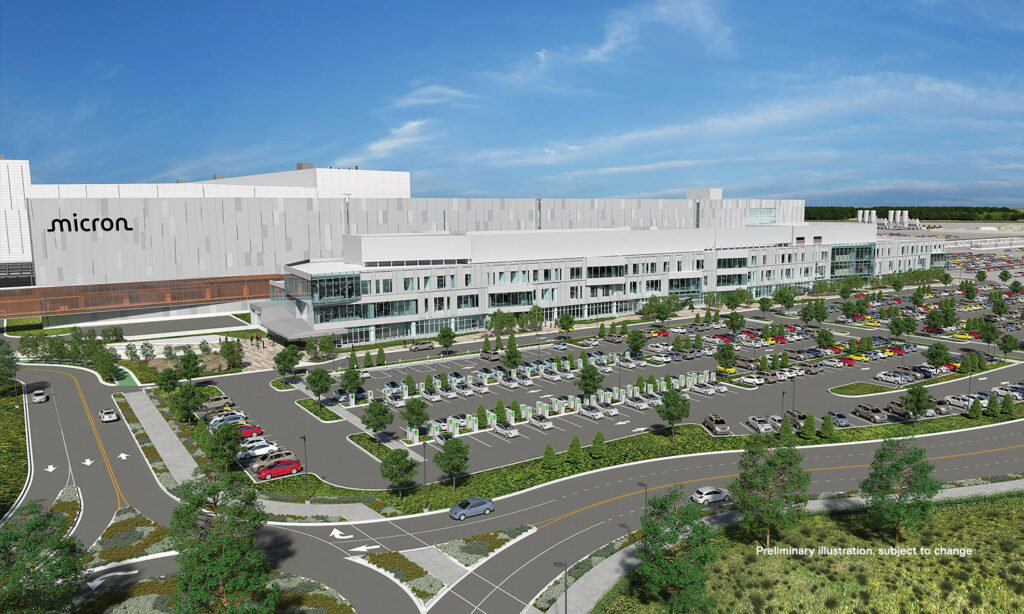
Earlier this year in January, Micron officially broke ground at a new $100 billion dollar facility in Syracuse, NY (4). This is just one example of the increased presence of data centers that is coming. By 2030, AI is projected to drive a 165% increase in data center power demand – meaning this isn’t stopping or slowing anytime soon (5).
It’s not just the big projects making headlines, either. Facilities that were originally built for other industries are being converted into data centers. You’re not always hearing about them, but they add up, adding to the strain on your electric bill.
Why New York is Getting Hit Especially Hard
New York was already one of the most expensive states for electricity, and now it’s just getting worse. Wholesale electricity prices have jumped 78% in a single year, and we’ve actually lost generating capacity since 2019 even as demand keeps climbing (6).
Meanwhile, the number of large data center projects proposed in the state has exploded – from just 6 projects in 2022 to now 48+ projects, representing enough electricity demand to equate about 8 million new homes (7).
State lawmakers are taking notice. There’s now a proposed three-year moratorium on new data center construction, and Governor Hochul launched a formal proceeding to make sure data centers pay their fair share for grid upgrades (8). These are positive steps, however legislation changes take time. Rate cases take years. And your next electric bill is showing up in 30 days.
Every Major New York Utility is Raising Rates
Here’s the part that hits closest to home: it doesn’t matter which utility you’re on. If you’re a New York homeowner, your provider is raising rates right now.
- National Grid: Gas bills are up 32% and electric bills up 18% compared to last year. Delivery rate increases of 16% for gas and 11% for electric went into effect September 2025 (11).
- Central Hudson: Three-year rate hike plan started September 2025. Electric: +3.12% year one. Gas increases climb to 7.4% by year three (12).
- NYSEG: Proposing a 33.5% gas and 23.7% electric delivery increase (13).
- RG&E: Proposing 26% electric and 22.2% gas delivery increases (13).
- Orange & Rockland: Recently approved three-year rate plan: gas heating jumps 10.9% in year one, plus 3.5% and 3.8% in years two and three. Electric: 4.6%, 3.3%, 3.5% (14).
- Con Edison: Electric rates going up 3.5% this year, 3.2% in 2027, and 3.1% in 2028. Gas: 4.4% this year, 5.7% in 2027, 5.6% in 2028 (10).
Behind every rate filing is a real family dealing with higher costs. Across the state, utility customers are now carrying $1.8 billion in unpaid bills, and over 1.3 million households are at least two months behind on payments.
Last year, more than 400,000 households had their utilities shut off (8). And with this winter running 15-20% colder than last year, the pressure has only gotten worse.
Solar is Still the Answer in 2026
As you likely already know, the Federal 30% residential solar tax credit sunset on December 31, 2025. That’s a big change, but what a lot of people don’t realize is that the math still works for majority of homeowners and business owners.
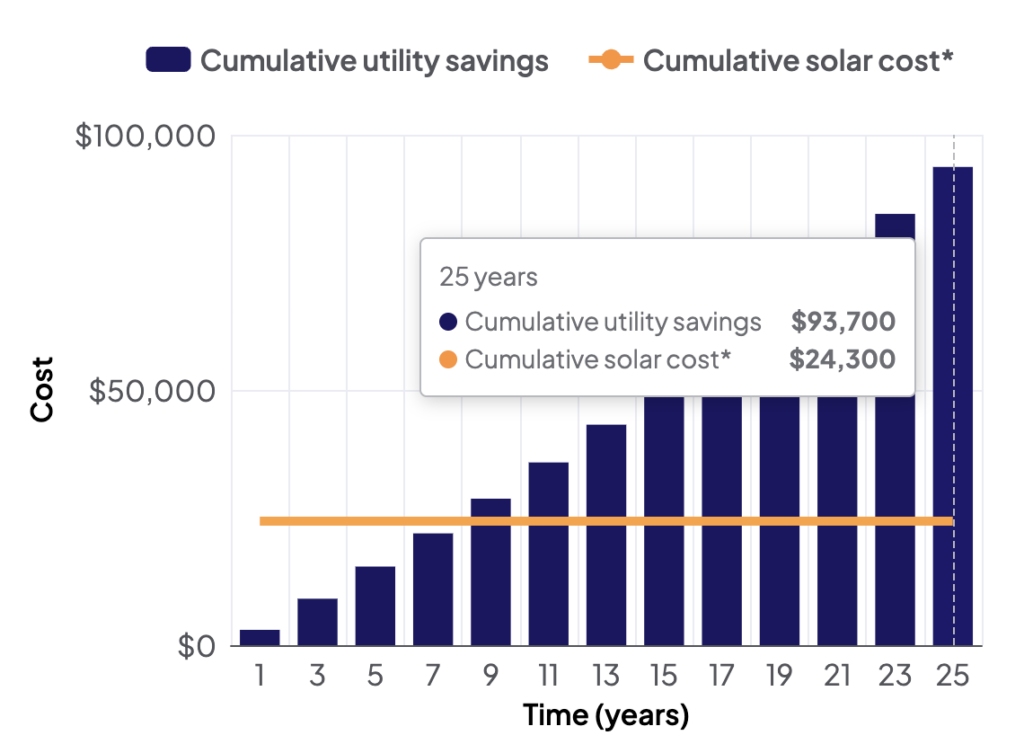
In fact, because rates are climbing so aggressively, the savings from going solar are actually larger now than they were a few years ago – even without the federal credit. “Most homeowners will save $37,000 to $154,000 over 25 years with solar. Your savings depend on a few factors, including your electricity rates and the cost of your system” (9).
Doing nothing costs way more than solar ever will.
New York’s state incentives are now doing a lot of the heavy lifting. One of the biggest advantages right now is that New York offers 1:1 net metering at full retail rate for residential systems. Don’t miss out on these savings – and battery incentives. As solar is adopted more and more, these State incentives are likely to decrease.
Over the lifetime of your solar system, your savings could double or even triple your initial investment cost. That’s well worth it.
Solar + Battery = Energy Independence
If your utility is moving to time-of-use rates, a battery lets you store solar energy during the day and use it during expensive peak hours. That alone can save you hundreds of dollars a year. Beyond the savings, batteries give you reliability and comfort – when the power goes out, your battery keeps your home running. As New York’s grid faces more strain, having your own energy storage gives you something you can’t really put a price on: independence from the grid when it matters most.
What Does this Mean for You?
Electricity costs in New York are going up, and everything we’re seeing – data center growth, aging infrastructure, wholesale price increases – suggests they won’t be stopping anytime soon. Waiting for things to settle down is a losing battle.
Solar gives you a way to combat these increases by taking control of your bills. Between New York’s state incentives, 1:1 net metering, and the pace at which rates are climbing, the financial case is strong. We understand it’s a big decision and we don’t want you to rush into anything – but the information you need to make a confident decision is available right now, and our team is here to walk you through it.
Reach out to Kasselman Solar now and see how we can get you started on a path to a brighter future!
Frequently Asked Questions:
Exact savings can vary for a variety of reasons since this is based on your electricity usage, solar installation, cost, etc. According to EnergySage, most homeowners save between $37,500 and $154,000 over 25 years.
Want to see your exact projected savings? We recommend starting with a free personalized estimate.
Once your system is installed, your cost of producing electricity is locked in. When the utility files its next rate case, cost for their electricity goes up, however energy generated by your solar panels won’t change. Each year you’ll actually be saving more as rates keep increasing.
That’s what we’re here for! Each home is unique – roof angle, shading, energy usage, utility, location etc. The only way to truly know if solar is a good idea for your home is to get an estimate.
Our team will evaluate your home, walk you through what a system would look like, and give you a full estimate so you can make an informed decision.
The new Micron facility has just begun construction, however when fully built, the Micron facility will consume over 1,000 MW of power. That’s more electricity usage than the states of Vermont and New Hampshire combined.
Yes. This year, Kasselman Solar earned NYSERDA’s Platinum Quality Solar Installer designation – the highest tier available. Only four solar companies in the state have earned this status. Read more in our article here.
Read More - Sources:
- Forbes. Electricity Bills Got More Expensive in 2025 — Despite Trump’s Promise to Reduce Utility Costs. February 13, 2026.
- Empire Center for Public Policy. Empire Center Warns of Sharp Increase in New York Electricity Prices. 2025.
- McKinsey & Company. What Is a Data Center? McKinsey Featured Insights, 2024.
- Micron Technology. Micron’s U.S. Expansion: New York. Micron, 2025.
- Goldman Sachs. AI to Drive 165% Increase in Data Center Power Demand by 2030. 2024.
- American Public Power Association. NYISO Releases White Paper Detailing Drivers of Rising Electricity Prices. 2025.
- Harris Beach Murtha. NYISO Considers Revisions to Large Load Interconnection Process. 2025.
- Albany Times Union / AARP. New York Utility Customers Have $1.8 Billion in Unpaid Bills, AARP Says. 2026. See also: Finger Lakes 1 / AARP. Utility Arrears Surge across New York. February 2, 2026.
- EnergySage. Solar Panel Cost in 2026: It May Be Lower Than You Think. 2026. See also: EnergySage. New York Solar Incentives, Tax Credits & Rebates 2026. 2026.
- Gothamist. State Approves Con Ed Rate Hike for Gas and Electric. January 22, 2026.
- Spectrum News. National Grid Warns Customers of Higher February Energy Bills. February 2026.
- Poughkeepsie Journal. Central Hudson Three-Year Rate Increase Plan. August 15, 2025.
- NY1. Public Service Commission Holds Hearing on Potential RG&E Rate Increases. September 30, 2025.
- NY Senate Newsroom. Orange & Rockland Utilities Higher Electric and Gas Rates. 2025.