By Steve Kasselman, CEO of Kasselman Solar
New York’s power grid is approaching a breaking point. NYISO is warning of “dangerously thin” reliability margins starting summer 2026, with NYC facing a 410-650 MW shortfall that could leave hundreds of thousands of homes without power (1). Wholesale electricity prices jumped 40-140% in 2025, and utilities have locked in double-digit rate increase through 2028. After growing up in the energy business and now leading Kasselman Solar with 4,000+ installations, here’s what the data means for your family – and what you can do about it.
Key Takeaways
| The Problem | The Numbers |
|---|---|
| Grid shortfall (Starting summer 2026) | 410-650 MW (NYC/Long Island) |
| Wholesale electricity surge (2025) | +40-140% across NY |
| Utility rate increases | National Grid: +28% over 3 years, NYSEG: +9.9% approved, +23.7% pending, Central Hudson: +4.6% (Fall 2025) and more |
| Canadian imports collapsed | 11%->2% of NY electricity |
| Micron Syracuse plant demand | 928 MW (11% of NY's current usage) |
| The Solution | What's Available |
|---|---|
| NYS Tax Credit | 25% up to $5,000 |
| NYSERDA Battery Incentive | $200-$250/kWh ($5,000 or more per site) |
| VPP/DLM Utility Payments | Ongoing income from your battery |
| Net Metering | 1:1 credits, 20-year grandfathering |
The Grid Crisis No One Is Talking About
In October 2025, New York’s grid operator issued its most serious warning in years: formal reliability violations beginning summer 2026. NYISO’s January 2026 follow-up confirmed the violations remain on track — and warned that BOEM’s December 22nd suspension of 1,740 MW of offshore wind projects ‘could exacerbate the previously identified reliability violations’ (2). The projected shortfall is 410-650 MW – enough to power 400,000-650,000 homes (1). By 2030, that gap could exceed 1,100 MW (7).
What’s driving this:
- 1,617 MW of power plants retired since May 2023, with 3,000 MW more potentially offline by 2034
- 25% of NY’s generating capacity is 50+ years old
- Micron’s Syracuse chip plant will need 928 MW at full build – 11% of the state’s current consumption (4)
- Canadian imports collapsed from 11% to 2% due to drought; Quebec is now a net importer (6).
- 10% tariff on Canadian energy could add $42-105 million annually to NY costs
December 29th gave us a preview. Governor Hochul declared a state of emergency after 70 mph winds knocked out power across the region. Thousands lost electricity for 48-72 hours. The grid didn’t fail because of the storm – it failed because it’s already running at the edge.
Why Your Electric Bill Keeps Climbing
New York residential electricity averages 26.67 ¢/kWh – 62% above the national average. Rates have climbed 33% since 2020, and they’re accelerating. Over 1 million NY households are 2+ months behind on bills. In May 2025, 61,000+ households had power shut off – the highest ever recorded.
What’s locked in:
- National Grid: 28% increase over three years (+$21/month in year one)
- NYSEG: 9.9% approved, +23.7% pending for 2027
- Central Hudson: 4.6% this fall, more through 2028
- Wholesale prices: Up 40-140% statewide
- And more pending increases
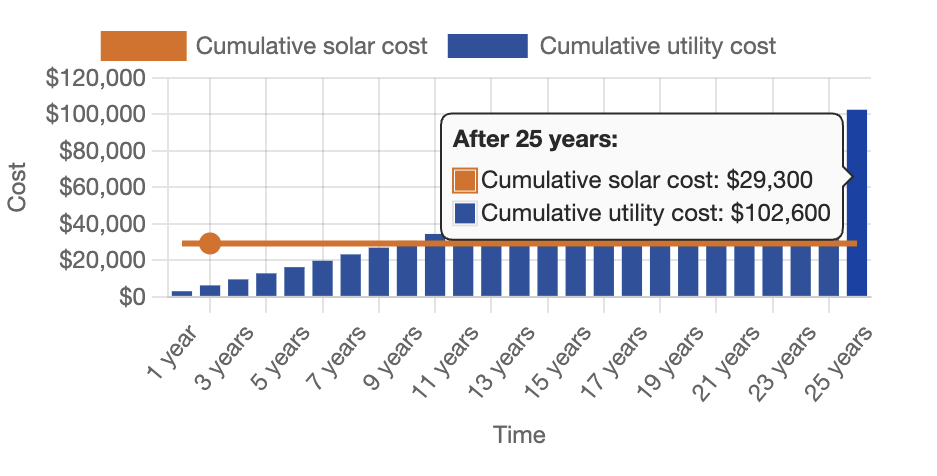
With solar you can combat these increases:
What Our Family's 75+ Years in Energy Taught Me
My family started Kasselman Electric in 1948. Today, my mother, Becky Kasselman, owns the company – it’s a certified NYS Women’s Business Enterprise – and I serve as Vice President & Chief Development Officer alongside running Kasselman Solar. Kasselman Electric does far more than residential work. We handle critical infrastructure projects, commercial electrical systems, industrial installations, and standby generators for facilities that can’t afford to lose power. When municipalities, schools, and businesses need electrical work done right, we’re the call they make.
I founded Kasselman Solar in 2014 because the industry was changing. Solar became affordable. Battery technology improved. And utility rates were climbing in ways that made the economics impossible to ignore.
But here’s what most solar companies won’t tell you: solar panels alone don’t keep your lights on when the grid fails. When the grid goes down, your system shuts off automatically – it’s a safety requirement to protect utility workers. Unless you have battery storage or a generator, you’re as vulnerable as neighbors without solar.
That’s why we offer both. Enphase battery systems for silent, maintenance-free backup that recharges from your panels daily. Generac generators for whole-home protection during extended outages. Some homes need one, some need both – we help you figure out what’s right.

The Truth About Solar Leasing in 2026
I see it constantly: leases and PPAs marketed as “free solar” or “$0 down.” We don’t offer them. Here’s why – briefly:
- You don’t own the system. A finance company owns the panels on your roof for 20-25 years.
- You don’t get the incentives. The 25% NYS tax credit, NYSERDA rebates – they go to the leasing company, not you. On a $30,000 system, that’s $7,500+ you’re handing away.
- Escalator clauses. Most leases increase 1-3% annually (5). Over 25 years, your payment can nearly double.
- Selling gets complicated. Buyers must assume the lease or you buy out the contract – often $10,000-$20,000+.
- If you qualify for financing (and most homeowners do) ownership makes more financial sense. We offer multiple financing options, often with payments lower than lease payments, and you own the system from day one.
- More on this in a future post. For now: if someone’s offering “free solar,” ask who gets the tax credits and what happens at the end of the lease term.
Want to see how solar can help you? Get a Free Instant Estimate with our team:
NY Incentives Stronger in 2026
The Federal 30% residential tax credit expired December 31, 2025. But here’s what most people don’t realize: New York State incentives are so strong, they’re largely compensating for that loss.
| Incentive | Amount | Notes |
|---|---|---|
| NYS Tax Credit | 25% (up to $5,000) | Immediate savings on state taxes |
| NYSERDA Battery Incentive | $200-$250/kWh ($5,000 or more per site) | For Enphase IQ Battery 5P/10C |
| Net Metering | 1:1 credits, 20 years | Grandfathered if you act now |
| Property Tax Exemption | 100% for 15 years | Added home value isn't taxed |
| Sales Tax Exemption | 100% | No tax on solar equipment |
Plus ongoing income. When you add an Enphase IQ Battery and enroll in your utility’s VPP/DLM program, they pay you for allowing your battery to support the grid during peak demand – typically 10 events per summer, 2-4 hours each. It’s passive income from equipment you already own.
Combined, that could be $8,000-$12,000+ in savings still available. New York has made residential solar viable even without Federal support.
What I'd Tell My Neighbor
If you have solar but no battery: December showed you what’s missing. Add backup while NYSERDA energy storage incentives are available – generally $5,000 or more off your battery system.
If you’re considering solar: The Federal Credit is gone, but $8,000-$12,000+ in NY incentives remain. With rates climbing through 2028, you’re hedging against an increasingly expensive baseline. Don’t lease – own your system.
If your system is 5+ years old: Technology has improved. Your needs may have changed. There are opportunities to expand, add storage, or upgrade. Schedule a free system review today!
The Bottom Line
NYISO calls this “a significant inflection point.” Wholesale prices doubled in parts of the state. Utility rates are locked in to climb. Canadian imports dried up. Micron is adding massive demand. Storms aren’t slowing down. The grid is getting more expensive and less reliable at the same time.
Solar locks in your energy costs. Batteries keep you running when the grid fails – and pay you through VPP/DLMs. The incentives to make it happen are still available, but they’re declining.
After 4,000+ installations and counting, my team is here to help.
Reach out to Kasselman Solar now and see how we can get you started on a path to a brighter future!
Frequently Asked Questions
A: In 2025, wholesale prices jumped 40-140%, utilities implemented 10-28% rate increases, and infrastructure costs are being passed through.
NY electricity now costs 62% more than the national average.
A: NYISO projects a 410-650 MW shortfall for NYC/Long Island starting summer 2026. This doesn’t guarantee blackouts, but the grid will operate with dangerously thin margins.
A: Standard systems shut off automatically during outages. You need battery storage (like Enphase) or a generator to maintain power. We install both.
A: Yes. NY’s 25% state credit, NYSERDA rebates, net metering, and tax exemptions still provide $8,000-$12,000+ in combined value. With rates climbing 10-28%, the savings from each kilowatt-hour your produce have actually increased.
A: Backup solar means you’re still connected to the utility, but you can keep selected circuits running during outages using a battery (and the right controls).
Off-grid means you’re not connected to the utility at all – your solar + batteries (and often a generator) must cover your energy needs year-round, including winter stretches.
In New York, most homeowners choose grid-connected + backup battery because it’s more cost-effective and still delivers outage protection.
A: Delivery increases commonly reflect costs for grid hardening, storm response, pole/wire replacement, substation work, vegetation management, and meeting newer reliability/peak-demand requirements.
Those costs are recovered through delivery rates over time – so even if you conserve, your per-kWh delivery charge and/or fixed charges can still increase.
A: Imports can provide extra supply during tight conditions and can help stabilize prices. When imports decline (for example due to hydro constraints, transmission limits, or broader market changes), New York may rely more on in-state generation and other resources – often at higher cost – especially during peak demand. That’s one reason imports show up in discussions about both reliability and price pressure.
A: A Virtual Power Plant (VPP) or Dynamic Load Management (DLM) program pays participants for helping reduce strain on the grid during peak periods.
For homeowners, that can mean the utility or program operator calls short, limited “events” (often a few hours) where your battery supports the grid (or reduces your home’s draw). Compensation varies by program and territory, but the concept is: your battery provides grid value during peaks, and you get paid for participating.
A: It depends on two things: how much battery capacity you have and what you choose to back up.
Most homeowners back up “critical loads” (refrigerator, lights, outlets, Wi-Fi, sump pump, some heating controls) rather than the entire home. In an outage, a battery can often run critical loads for several hours to a day, and longer if you’re using less power and your solar can recharge it during daylight. If you want to back up high-draw items (central AC, electric heat, EV charging), you usually need more battery capacity, and sometimes paired with a generator.
Sources:
- New York Independent System Operator. Short-Term Assessment of Reliability: 2025 Quarter 3. NYISO, October 13, 2025.
- New York Independent System Operator. Short-Term Assessment of Reliability: Q4 2025 Report. NYISO, January 13, 2026.
- EnergySage. Electricity Cost in New York: 2026 Electric Rates. EnergySage, January 2026.
- Empire Center for Public Policy. Empire Center Warns of Sharp Increase in New York Electricity Prices. January 15, 2026.
- EnergySage. What You Need to Know About Solar Leases in 2025. EnergySage, 2025.
- U.S. Energy Information Administration. U.S. Northeast Is Relying Less on Electricity Imports from Canada. Today in Energy, October 2025.
- Potomac Economics. Memorandum: MMU Comments on the 2025 Q3 Short Term Assessment of Reliability (STAR). David Patton, Pallas LeeVanSchaick, and Joseph Coscia, October 27, 2025.