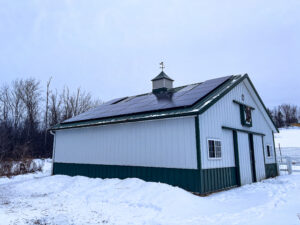
With the recent cold snap and freezing temperatures across the Northeast (plus plenty of snow and ice), it’s no surprise that homeowners are asking the same question: does solar still work in winter? When the weather gets extreme, it’s easy to assume that solar panels have difficulty producing.
The truth is, solar systems continue to deliver major benefits all year-round. Whether it’s below-freezing temperatures, cloudy skies, or snow on the roof, modern solar panels are built to handle harsh winter conditions. Solar panels can actually operate more efficiently in the cold.
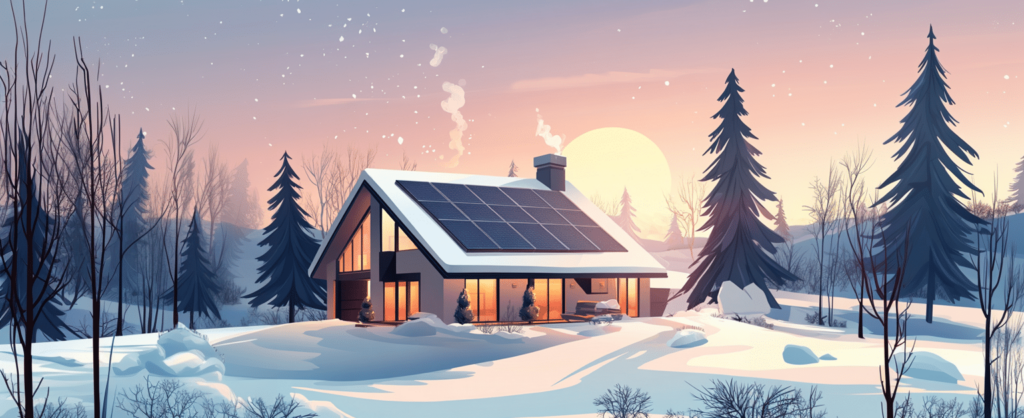
Let’s debunk some common myths about going solar in the winter and take a look at how to optimize your panels’ production throughout the colder months:
Myth #1: Solar panels don't work in cold weather
Fact: Solar panels are actually MORE efficient in cooler temperatures
A common misconception is that solar panels utilize heat from the sun to generate electricity, but in actuality, solar panels rely directly on sunlight, not heat. In fact, excessively high temperatures can reduce the efficiency of solar panels, as this can lead to the system overheating which may slow down production.
With a higher efficiency in winter, your solar panels are able to produce more energy per hour of daylight compared to hotter seasons (1). This means that even on crisp winter days, as long as there’s sunlight, your solar system can generate electricity at peak efficiency.
Myth #2: Solar panels can't generate energy in cloudy or snowy weather
Fact: Solar panels can still generate electricity on cloudy or snowy days
Solar panels don’t just function on bright, sunny days. While direct sunlight is certainly ideal, solar panels can still generate electricity from diffused sunlight – which occurs even on cloudy days. Although production will likely be lower in rainy or snowy weather, your system continues to generate electricity and helps reduce your reliance on the grid.
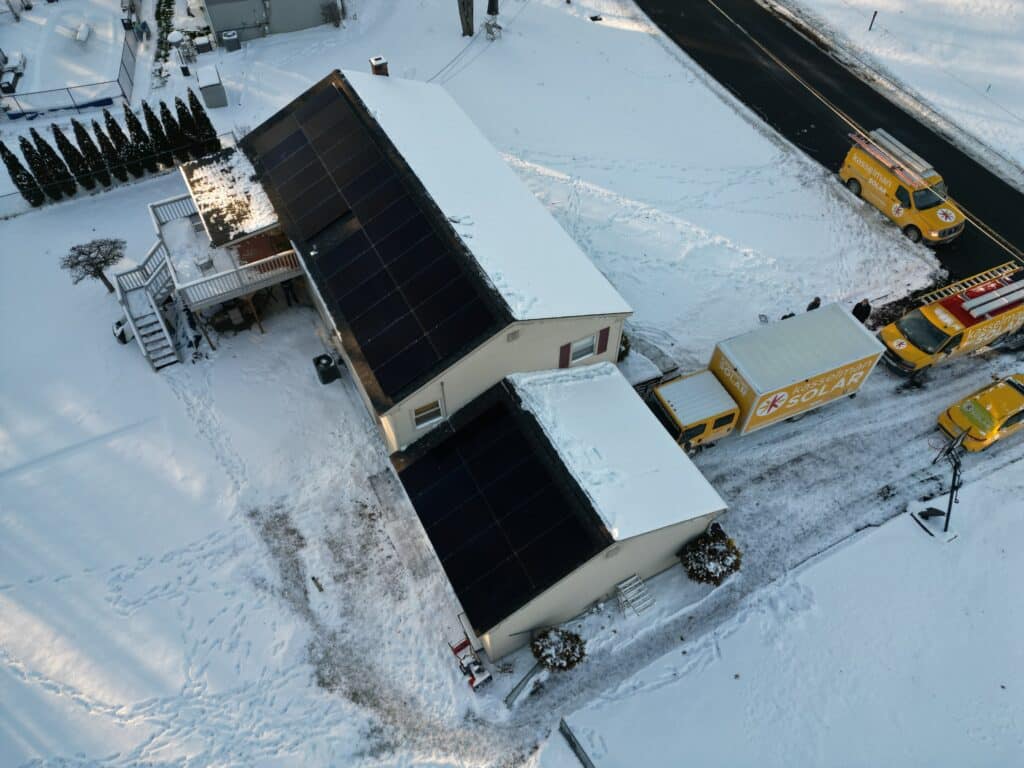
Another reason production may be lower in winter weather is from snow buildup on your roof, and therefore on top of the panels. Having a buildup of snow on top of your solar panels can temporarily block sunlight from reaching your panels, lowering production in the immediate aftermath of a snowstorm.
One helpful note during big storms: if your panels are fully covered, production can drop until they clear – but once snow slides off (or melts), output can bounce back pretty quickly (4). (This is also why the proper angle of a solar panel install is so important!)

Myth #3: Snow damages solar panels
Fact: High-quality solar panels are designed to withstand harsh weather conditions
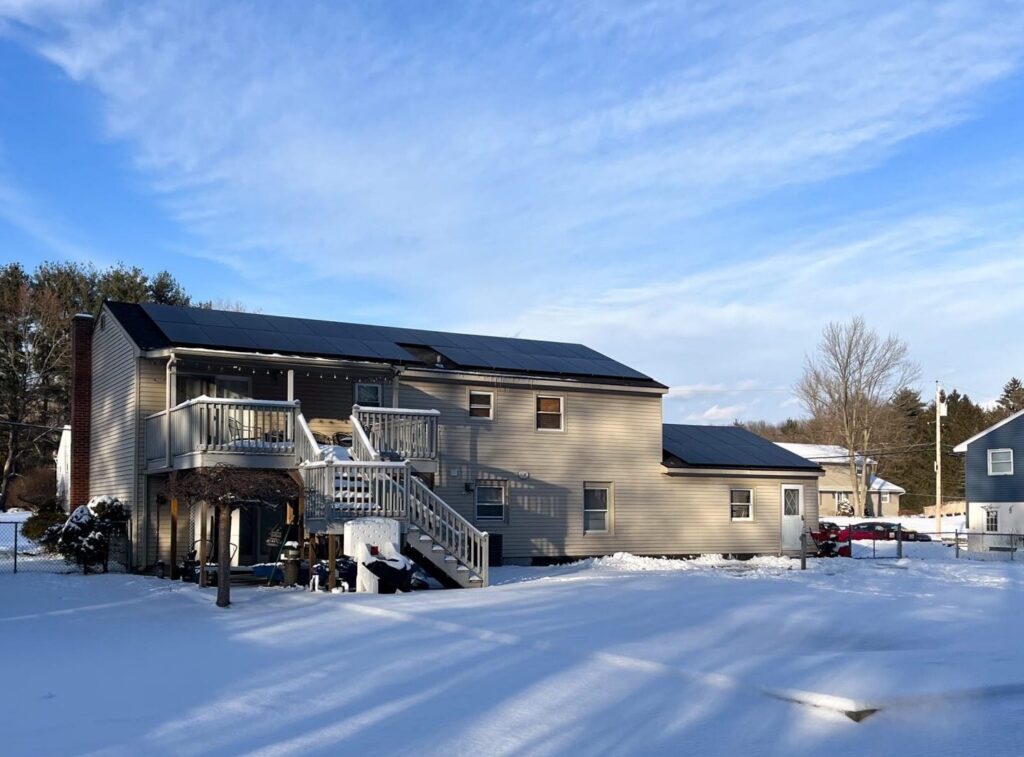
The solar panels and equipment that we offer are tested by manufacturers to ensure they can endure a variety of weather events. From heavy snowfall to strong winds to extreme temperatures, these panels are built with durability in mind (5). All solar panels are designed to bear a certain amount of weight, and snow and ice accumulation will usually not be heavy enough to cause damage (1).
Solar panels are typically installed at an angle (this angle is necessary as in New York, in the northern hemisphere, the sun is always located farther south in the sky, not directly overhead) which helps snow slide off, and most modern systems are highly resistant to the effects of freezing temperatures. Extreme accumulation of snow and/or ice may require removal to maximize solar panel output.
Additionally, quality solar panels and equipment generally come with a manufacturer warranty on the products, and in addition to our own warranty on the installation itself, even if your panels do get damaged this can usually be taken care of in a timely manner!
Myth #4: Shorter days and less sunlight make winter a bad time to install solar
Fact: Solar energy is a good investment at all times of the year – especially with solar energy storage options and constantly improving technologies
It’s true that winter days are shorter, meaning there are overall fewer hours of sunlight to generate electricity (2). However, modern solar systems paired with battery storage can help you make the most of the energy you produce. During sunny periods, even in winter, your solar panels can generate energy and charge your solar battery – storing energy for use when the sun isn’t shining or when energy demand peaks.
This stored energy can keep your home powered through nighttime hours and help make sure your solar investment works for you year-round.
Additionally, New York State offers net metering, which allows you to send excess energy back to the grid and earn credits that can be used to offset your electricity costs if production is lower during winter months.
Incentive Update (Winter 2026): Battery storage incentives are available through NYSERDA’s Residential Energy Storage Program, and availability can vary based on region and funding levels (6).
Tips for Optimizing Solar Performance During Winter 2026
Keep Panels Clear of Snow and Debris:
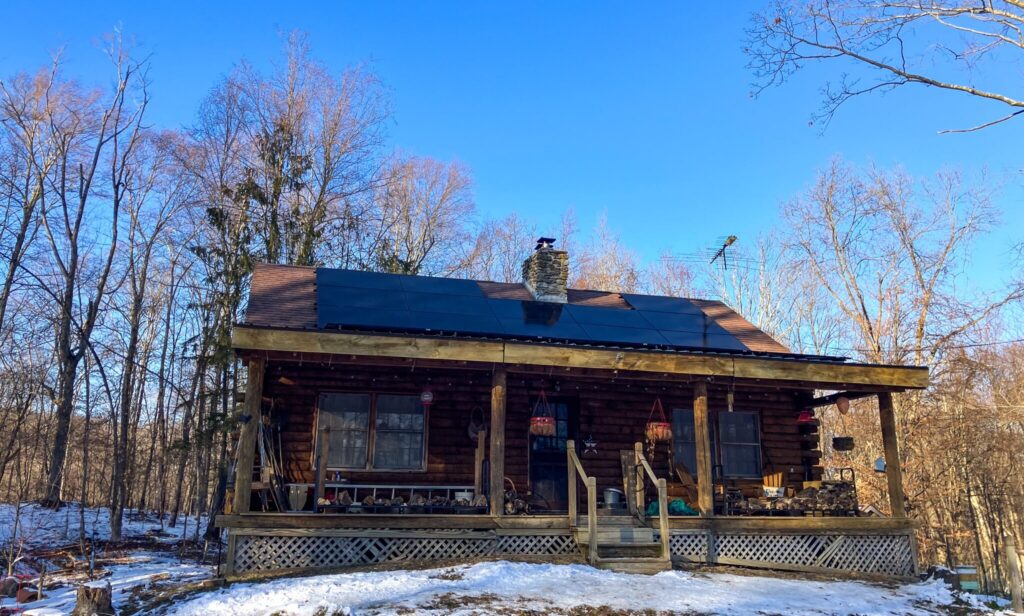
If snow accumulates on the panels, it can temporarily block sunlight from reaching them properly, so it’s important to clear it off if necessary. Even if snow accumulates on your solar panels, it typically will slide off on its own over time and doesn’t need to be manually removed.
Whether you have roof mounted or ground mounted solar, since we are in the northern hemisphere, your solar panels are installed at an angle to maximize sunlight. This installation angle is beneficial for snow accumulation as it often melts or slides off before you would even need to clear the snow – cleaning off any dust or debris in the process!
If you do feel the need to clean the snow off manually, keep in mind there are specific tools, such as snow rakes, designed for use on panels to prevent scratching or other damages (3).
Monitor Your System’s Output:
Be sure to utilize your solar monitoring app, where you can easily track your system’s performance. Don’t be alarmed when your winter production levels don’t reach the same levels as warmer months – this seasonal difference is normal to a certain extent! Winter brings fewer daylight hours, cloudy and snowy weather, and overall less available energy.
By monitoring your system, you can be sure to catch any potential issues early and ensure your system is operating at maximum efficiency! If you notice issues with your solar system, get in touch with our dedicated service team so we can get things back up and running as soon as possible!
Take Advantage of Energy Storage:
By storing excess energy in a solar battery, you can make the most of your solar system during winter months when sunlight is less abundant. Battery storage systems allow you to tap into your stored energy whenever your system isn’t actively producing energy – such as at nighttime or during power outages.
Winter Solar FAQs
Yes. Solar panels work in winter because they generate electricity from sunlight, not heat. Even though winter days are shorter, solar still produces year-round – and it’s one of the best ways to reduce your reliance on the utility and stabilize energy costs over time.
Yes. Cold temperatures do not stop solar panels from producing electricity. In fact, solar panels can operate more efficiently in cold air than in extreme summer heat (as long as there’s sunlight), which is one reason solar remains a strong investment even during cold snaps.
Yes. Solar panels still generate electricity on cloudy days using diffused (indirect) sunlight. Production is usually lower than on a clear day, but solar can still meaningfully reduce how much power you need to buy from the grid.
Sometimes. If panels are covered by snow, production generally drops until they are naturally clear. The good news is that panels are installed at an angle, so snow frequently slides off naturally – and once panels clear, production typically rebounds quickly.
Usually not. Quality solar panels are designed and tested to withstand all kinds of harsh weather, including snow loads, wind, and freezing temperatures. With a properly engineered installation, solar is a durable, long-term home upgrade – even in snowy climates.
No. Solar systems will clear on their own as sunlight warms the panel surface and works to melt the snow off. In general, solar is low-maintenance – and winter doesn’t change that.
No. Solar panels need sunlight, so they don’t produce electricity at night. However, net metering and battery storage can help you use your daytime solar generation beyond the daylight hours – which is one reason many homeowners choose solar as a long-term cost-control strategy.
Yes. Battery systems are designed for year-round operation and are installed/configured to perform reliably through winter conditions. If winter outages or storms are a concern, solar + storage can be a powerful resilience upgrade.
Winter production is often lower for a variety of reasons:
- Shorter days (and less daylight hours)
- Lower sun angle (less intense sunlight)
- More clouds/storms (less direct sunlight reaching panels)
- Temporary snow coverage (snow accumulating on panels blocks sunlight until panels naturally clear)
Even with seasonal variation, solar is a strong decision because it is evaluated over the full year. Your high summer production will help offset the winter months.
A few simple steps:
- Reduce winter shading by trimming nearby trees
- Monitor your production consistently to identify any issues right away
- Let panels clear snow accumulation naturally
- Consider battery storage and/or generators to assist with outages and peak demand charges
Cold winter weather can bring questions about how well solar panels perform in colder months. The truth is, solar panel systems continue to provide significant energy savings, even when the days are shorter and temperatures drop. Using energy saving products such as solar battery storage systems, you can make even greater use of your system.
Get in touch if you are ready to go solar or add battery storage to your existing system!
Sources
EnergySage. “Solar Panels in Winter Weather: Do Snow and Ice Affect Power Production?” EnergySage, https://www.energysage.com/solar/solar-panels-in-winter-weather-snow-affect-power-production/
CNET. “How to Keep Your Solar Panels in Perfect Condition in Cold Weather.” CNET, https://www.cnet.com/home/energy-and-utilities/how-to-keep-your-solar-panels-in-perfect-condition-in-cold-weather/
EnergySage. “Solar Panel Cleaning: Everything You Need to Know.” EnergySage, https://www.energysage.com/solar/solar-panel-cleaning/
U.S. Department of Energy. “Let It Snow: How Solar Panels Can Thrive in Winter Weather.” Energy.gov, https://www.energy.gov/cmei/articles/let-it-snow-how-solar-panels-can-thrive-winter-weather
U.S. Department of Energy, Federal Energy Management Program. “Solar Photovoltaic Hardening: Resilience for Winter Weather.” Energy.gov, https://www.energy.gov/femp/solar-photovoltaic-hardening-resilience-winter-weather
New York State Energy Research and Development Authority (NYSERDA). “Residential Energy Storage Incentives.” NYSERDA, https://www.nyserda.ny.gov/All-Programs/Energy-Storage-Program/Energy-Storage-for-Your-Home/Residential-Energy-Storage-Incentives
Published: 1/24/2025